B-Side
Interaction Design
Overview
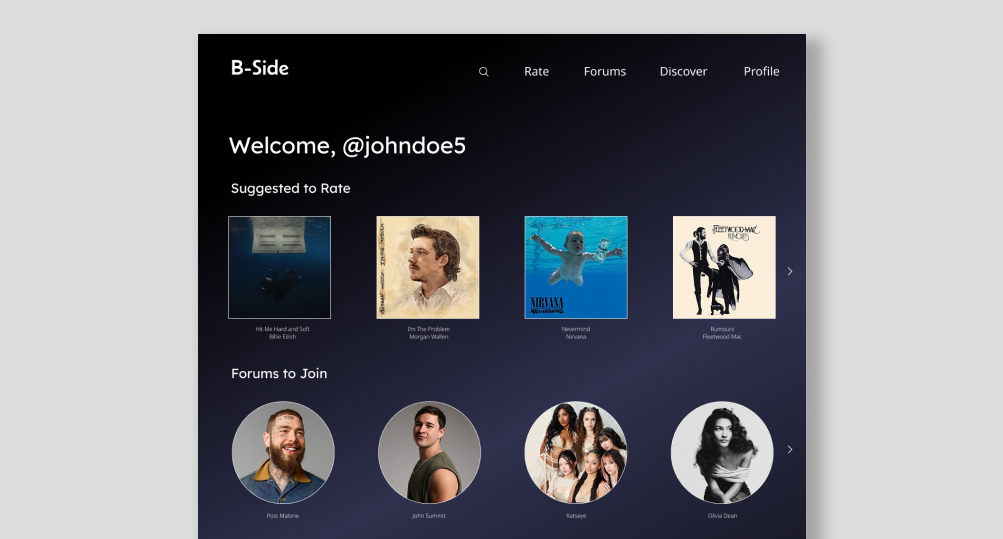
B-Side is a social listening platform that helps Spotify users connect through shared music taste. Through UX research, wireframing, and interaction design, I focused on creating low-pressure ways for people to discover music and connect with others beyond algorithms.
The Problem
Spotify is optimized for listening, but not for connection. While users discover new music every day, meaningful discussion, reflection, and community around music happens elsewhere.
The Process
Research
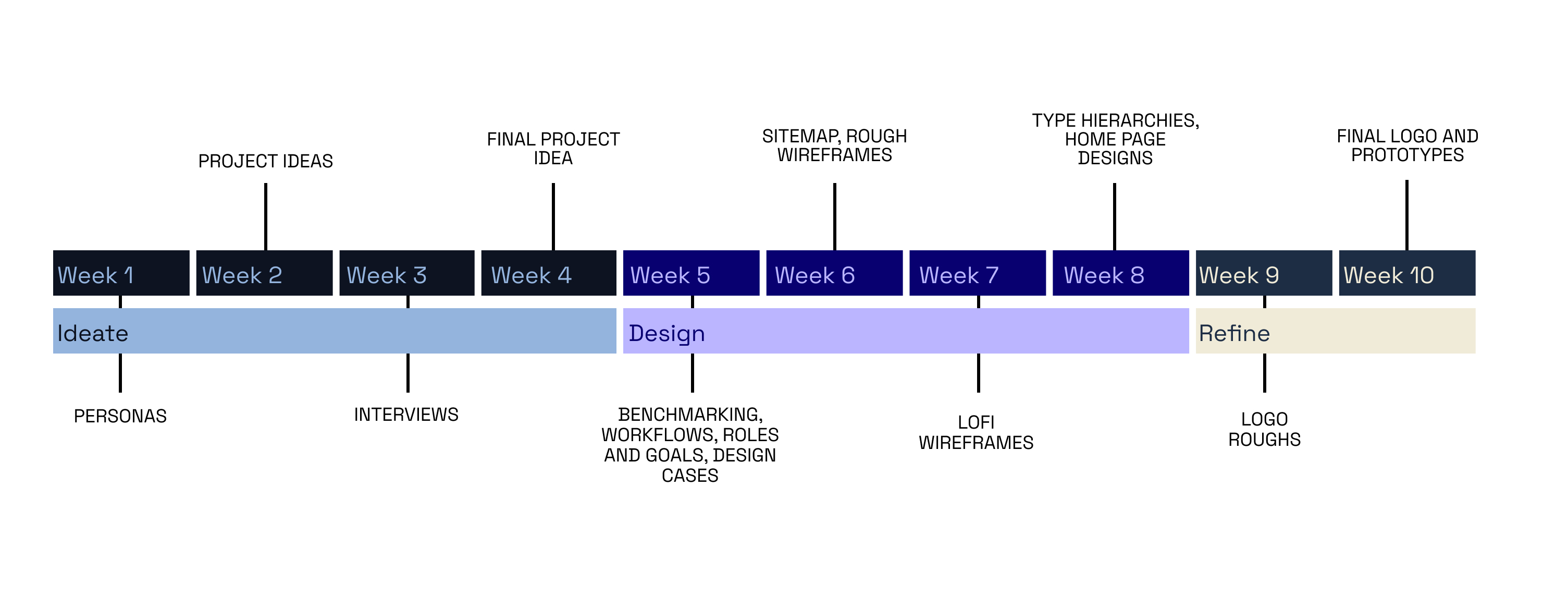
Through interviews with passionate Spotify users, several consistent themes emerged about how people want to engage with music socially.
- Discovery feels more meaningful when it comes from people, not algorithms alone
- People are more eager to make friends through their taste than to meet strangers
- Users value discussion, reflection, and community around music beyond listening
Sketching and Ideation
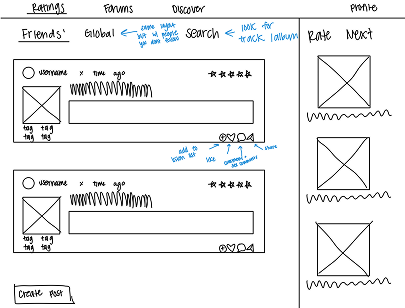
- Focused on connection over visibility
- Explored low-pressure ways to express music taste
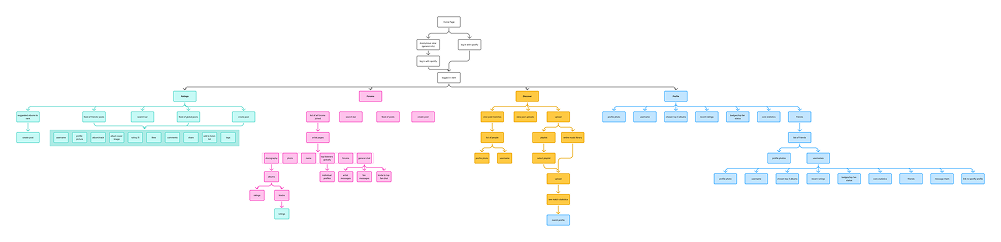
The Solution
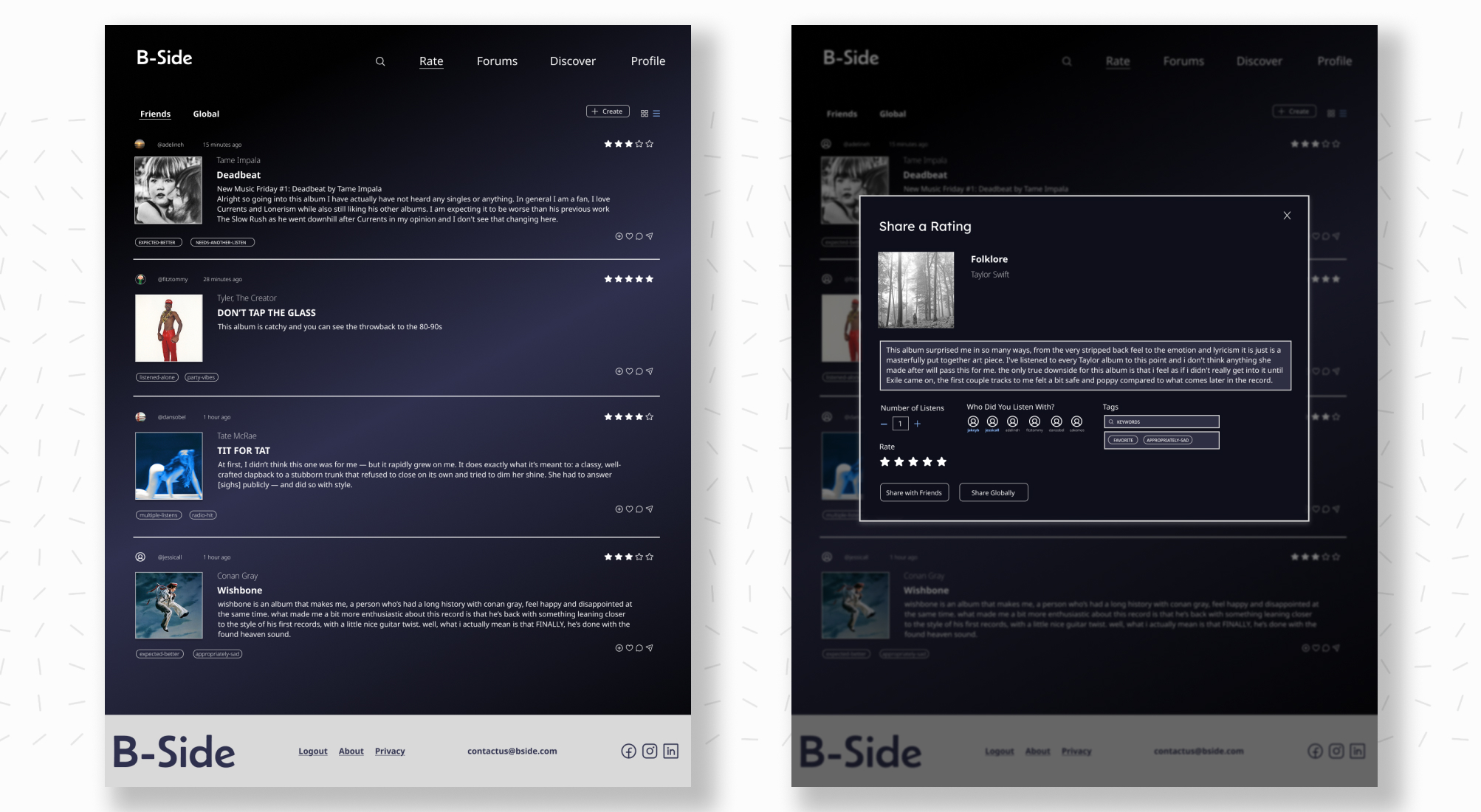
Review Music
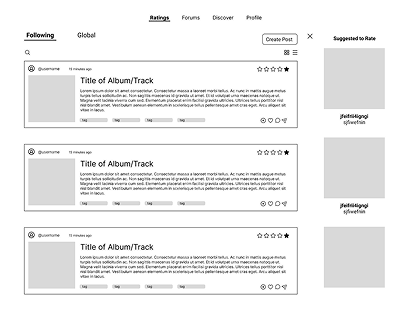
Users can post album or song ratings to be shared globally or with their friend network.
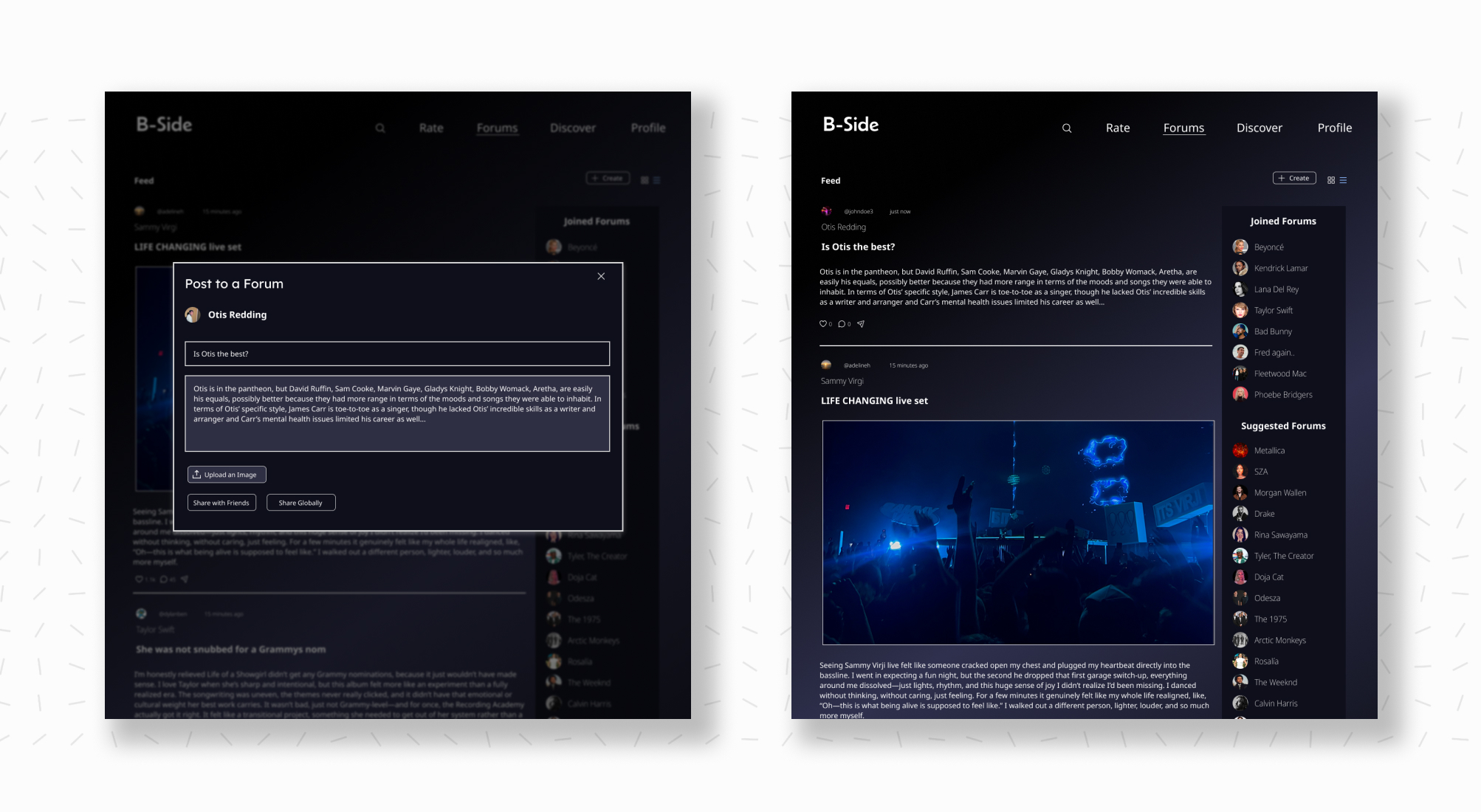
Join Forums
Users can join forum pages for artists they listen to or want to learn more about. Through creating and interacting with forum posts, users can meet others and engage in discussion.
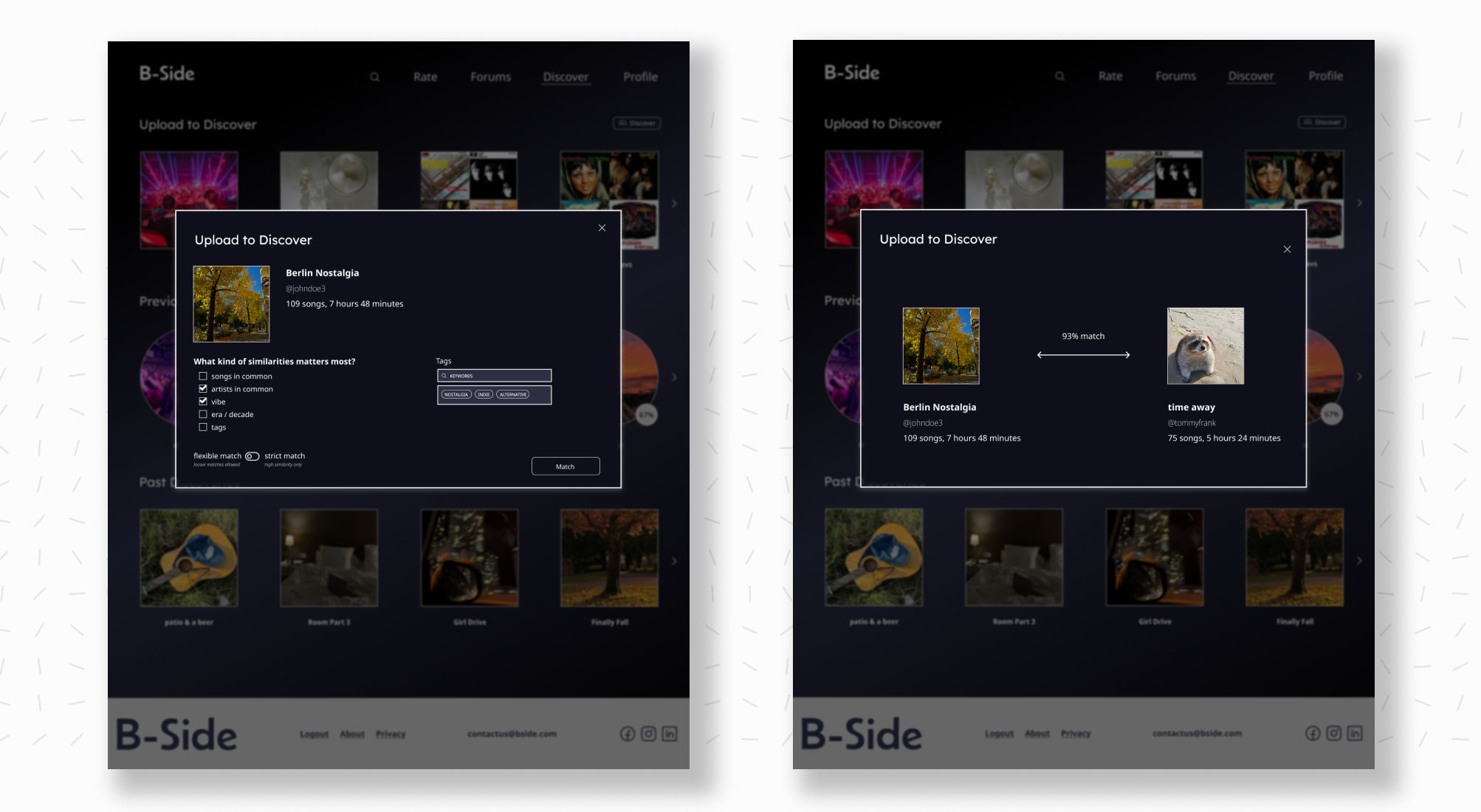
Discover Other Users
Users can upload playlists to be matched with others based on similar tastes and other preferences.
Profiles
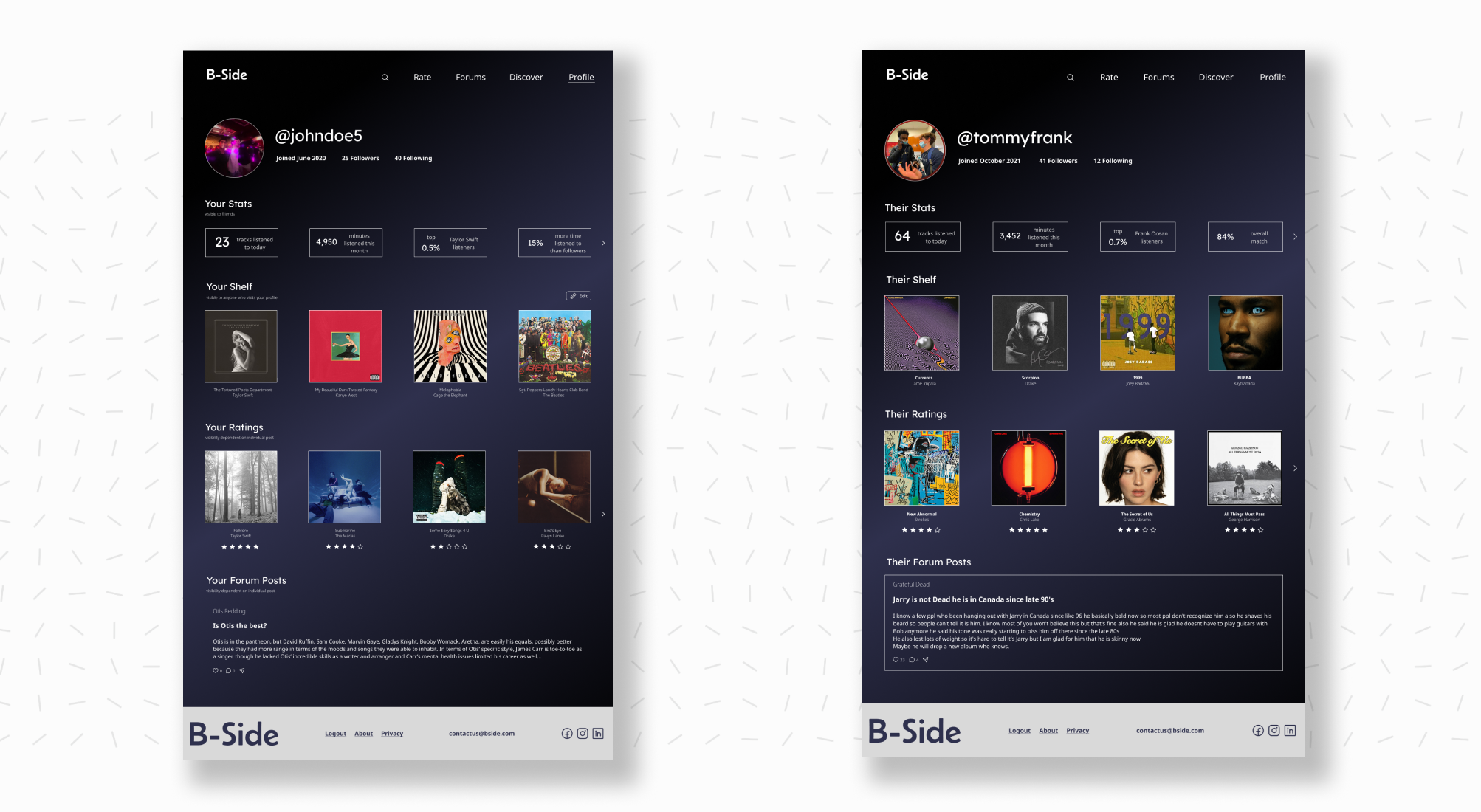
Profiles allow users to see their own statistics, past ratings, and friends. When looking at someone else's profile, users can learn more about the person's taste compared to a typical streaming profile.
Impact & Reflection
With B-Side, users can further connect with friends or strangers over shared music taste. Through interactions like posting ratings, joining forums, or getting matched based on a playlist, the platform enables more authentic connection around music.
This project reinforced how important doing user research is. Through my interviews, I learned about competitors' features, struggles with connecting over music, and what gaps need to be filled in the industry.